Harris Harper
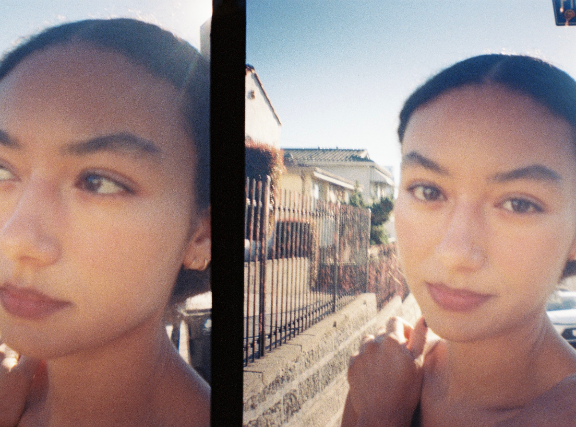
Harris Harper is a singer-songwriter born and raised in Los Angeles. She comes from a family in which musicianship, craft and community have long been closely connected.
Harris Harper captivates a room by turning its most understated moments into sources of intimacy. An earnest, distinctly feminine vulnerability gives Harper’s music its emotional weight. With her vocals and guitar, she invites the audience to close the distance between performer and listener.
Critics consistently recognize this unique comingling of control and tenderness. Entertainment Weekly called Harper “stunningly talented” at Carnegie Hall, while KALX Berkeley later wrote from the Fillmore that “the rawness of her voice shines through,” crediting that quality with “forging a bond with the audience.” Such praise points beyond technical ability. In Harper’s performances, private disclosure becomes shared experience through the quality of attention she offers to the room.
For Harper, authenticity is an extension of the values with which she was raised. In 1958, her great-grandparents Charles and Dorothy Chase opened the Folk Music Center in Claremont, California. The shop became a Southern California institution and remains in the family under the direction of their daughter Ellen, Harris’s grandmother. Harris grew up among its handmade instruments and objects valued for remaining both beautiful and useful over time.
The Folk Music Center is part instrument shop, repair workshop, museum, classroom, and gathering place. It treats folk music as a living craft: something learned through practice, sustained by community, and passed between generations. Its culture hinges on the belief that a well-made object should endure and that music comes alive through direct exchange. Harris has inherited those values while developing a sensibility that is all her own.
That sensibility has translated across venues of very different scales. Harper has performed original music at the Kia Forum and L’Olympia in Paris, supported Mitch Rowland across North America, and opened a West Coast run for Ben Harper & The Innocent Criminals. Five Cent Sound praised her whispery rasp, range, and precise lyricism, while PopEntertainment described the gentle quality of her voice and energy. At Thalia Hall, Social Casualty noted the sustained attention she commanded from an audience unfamiliar with her sound.
Harper’s education in fine arts informs her experiences in which the music, setting, and audience belong to the same conception. During a performance at James Turrell’s Dividing the Light Skyspace, the songs she selected played against an artwork shaped by changing light and perception. Their delicacy and stillness deepened the effect of the shifting visual environment, while the artwork gave the music a new emotional dimension. The Benton Museum’s description of the program as “the delicate, the ruminative, and the sparse” captures the coherence Harper created between music and place.
This fall, Harper will open for her father and The Innocent Criminals at The Basement East in Nashville and at Garcia’s in Chicago. These performances will place her in direct conversation with the musical culture in which she was raised while showing how fully she has transformed that inheritance into an independent artistic language.
Currently no events.